Academy · Playbook

The Multiplex Playbook

Duplexes, triplexes, and fourplexes are the "missing middle" — small enough for a first-time developer, big enough to matter. This playbook walks the entire deal: confirming the zoning allows it, sizing the buildable yield, underwriting the cost, and structuring the financing so it actually pencils.
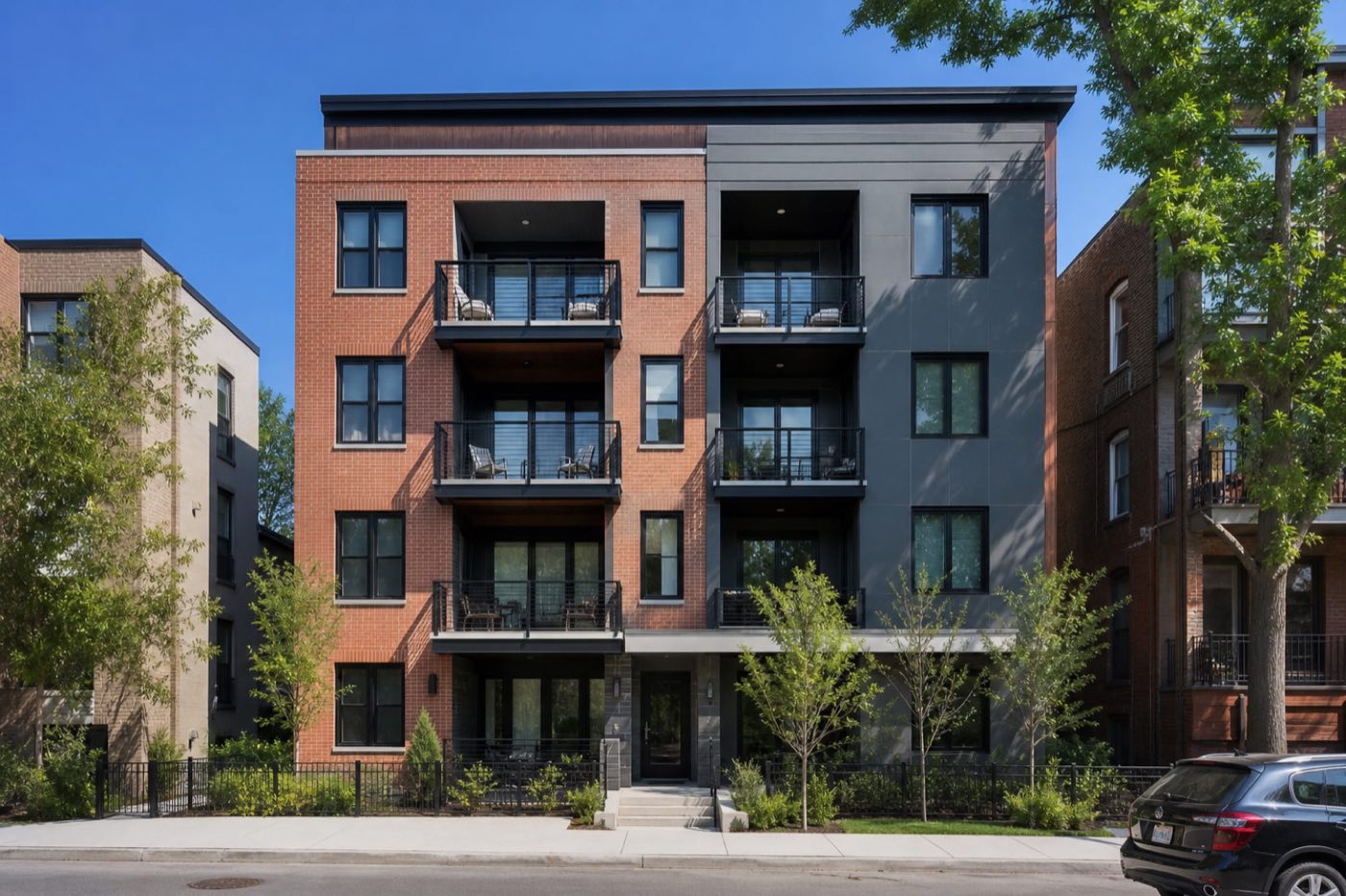
Newly built fourplex 'missing middle' building
The missing middle, built

Four units on one lot — small enough to finance, big enough to matter.

Same lot, four massing options 40×100 ft · upzoned to 4 units
Single base zoning 1 unit Duplex side-by-side 2 units Triplex stacked + 1 3 units Fourplex 2 over 2 4 units
Buildable GFA
1,800 sf
Buildable GFA
2,900 sf
Buildable GFA
4,050 sf
Buildable GFA
5,200 sf

Illustrative massing — the same parcel scaled from one home to a four-unit "missing middle" building.

Why the multiplex is the smartest first project

Many cities have legalized two to four units on lots that used to allow only one. That single change can multiply the value a lot supports — and a multiplex is small enough to finance, build, and manage without a large team.

More value per lot
Two to four units can support far more value than a single house on the same land — without buying more land.
Financeable scale
Small enough for residential or light commercial financing, so you do not need institutional capital to start.
Built-in resilience
Multiple units spread vacancy risk and produce rental income that supports the project through cycles.
The play

Seven steps from lot to leased-up

Run these in order. Each step has a clear go / no-go so you stop early on deals that will not work.

01
Confirm the zoning allows it
Check the lot’s zone and recent code changes. Many jurisdictions now permit duplex-to-fourplex on lots formerly limited to one home. Confirm the unit count, and note any overlays or conditions attached.
Go / no-go: Code permits the unit count you need.
02
Size the buildable yield
Apply FAR, lot coverage, setbacks, height, and parking to find how many units actually fit and at what sizes. The legal maximum and the practical maximum are rarely the same.
Go / no-go: A realistic unit mix fits the envelope.
03
Estimate construction cost
Build a cost per buildable square foot for your market and product type, then add soft costs: design, permits, financing, and contingency. Be honest — cost is where optimistic multiplex deals die.
Go / no-go: Cost basis is grounded in real local numbers.
04
Value the finished project
Decide your exit: sell the units, hold and rent, or condo-ize. Value accordingly using comparable sales or a rent-and-cap-rate approach. This is the revenue side of the proforma.
Go / no-go: Finished value clearly exceeds total cost plus profit.
05
Underwrite the deal
Combine land, cost, and value into a proforma. Check profit margin, return on cost, and yield on cost against your target. Stress-test the assumptions that move the answer most.
Go / no-go: Margin and returns clear your threshold with room to spare.
06
Structure the financing
Assemble the capital stack: your equity, a construction loan, and any partner capital. Prepare the package a lender needs — proforma, plans, costs, and your track record.
Go / no-go: A lender or partner will fund the gap.
07
Permit, build, and lease or sell
Move through permitting, manage the build to budget and schedule, then lease up or sell. Track decisions and actuals against your proforma so the next deal is sharper.
Go / no-go: Project delivers within budget and absorbs as planned.

The numbers that decide it

A multiplex pencils or it does not — and these are the levers. Know your local figures and run them before you offer.

Yield on cost
Stabilized net operating income divided by total project cost. The single best test of whether a hold makes sense.
Return on cost
Profit divided by total cost for a build-to-sell. Most builders want a healthy double-digit margin to absorb risk.
Cost per unit
Total cost divided by units. Compare it to local sale or rent value per unit to sanity-check the deal fast.
Coverage & DSCR
Whether rents cover debt service. Lenders care most about this for a hold strategy.
Does it pencil?

A fourplex feasibility snapshot

The whole deal on one screen — what it costs, what it makes, and the verdict.

Feasibility · 412 Maple St fourplex PENCILS · BUILD TO HOLD
Stabilized value
$1.62M
+$340K over total cost
Yield on cost
6.8%
vs. 5.0% market cap
Units
4
Total cost
$1.28M
NOI
$87K
Cost → value
Land
Build
Soft
Value
Rent roll
Unit 1 · 2BR$2,150/mo
Unit 2 · 2BR$2,150/mo
Unit 3 · 1BR$1,750/mo
Unit 4 · 1BR$1,750/mo
Gross rent$7,800/mo
Verdict
Yield on cost beats the market cap rate — value created, hold-worthy.

Illustrative snapshot — the levers above plugged into one fourplex deal.

Avoid these

Common ways a multiplex goes sideways

Assuming max units fit
Parking, setbacks, and unit sizes often cut the legal maximum down. Size the real envelope before you trust a unit count.
Under-budgeting soft costs
Design, permits, financing, and contingency can add 20-30% on top of hard costs. Skipping them turns a "deal" into a loss.
Ignoring parking rules
A single parking requirement can make a fourplex impossible on a tight lot. Check it in step two, not after you buy.
Optimistic exit value
Use real comparables, not hopes. If the deal only works at the top of the market, it does not work.

Run this playbook in UnlockLand

Keep going

Playbook
ADU Playbook
Add a single unit before scaling to a multiplex.
Guide
Feasibility Report Guide
Package your underwriting into a defensible report.
Path
Small Builder
Source and screen multiplex sites at speed.
Reference
Zoning Glossary
FAR, setback, coverage and the rest, explained.

See if your lot can carry a multiplex

Run the address through UnlockLand and get zoning, buildable yield, and a feasibility read in minutes.